 EN

 SI

By doing so, they have improved the conditions for economic activities and passenger transport, as railways are the backbone of future mobility. The modernization of the tunnel, which is almost eight kilometers long, removes a bottleneck in rail traffic between Austria and Slovenia and constitutes an important hub. .
Through the upgraded tunnel, rail traffic will be able to run faster, now at speeds of up to 120 kilometers per hour instead of a maximum of 50 kilometers per hour. The safety of rail traffic and consequently the safety of the passengers has thus been improved.
Double-track line replaced by a single-track line
In the old railway tunnel, which was put into service in 1906, there had been an electrified double-track railway line, which was replaced by a single-track line in a modernization project that rehabilitated damaged parts of the tunnel tube, rebuilt the entrance portal, and installed appropriate drainage, intervention corridors and fire safety systems. The implementation of this part was undertaken by CMC GROUP.
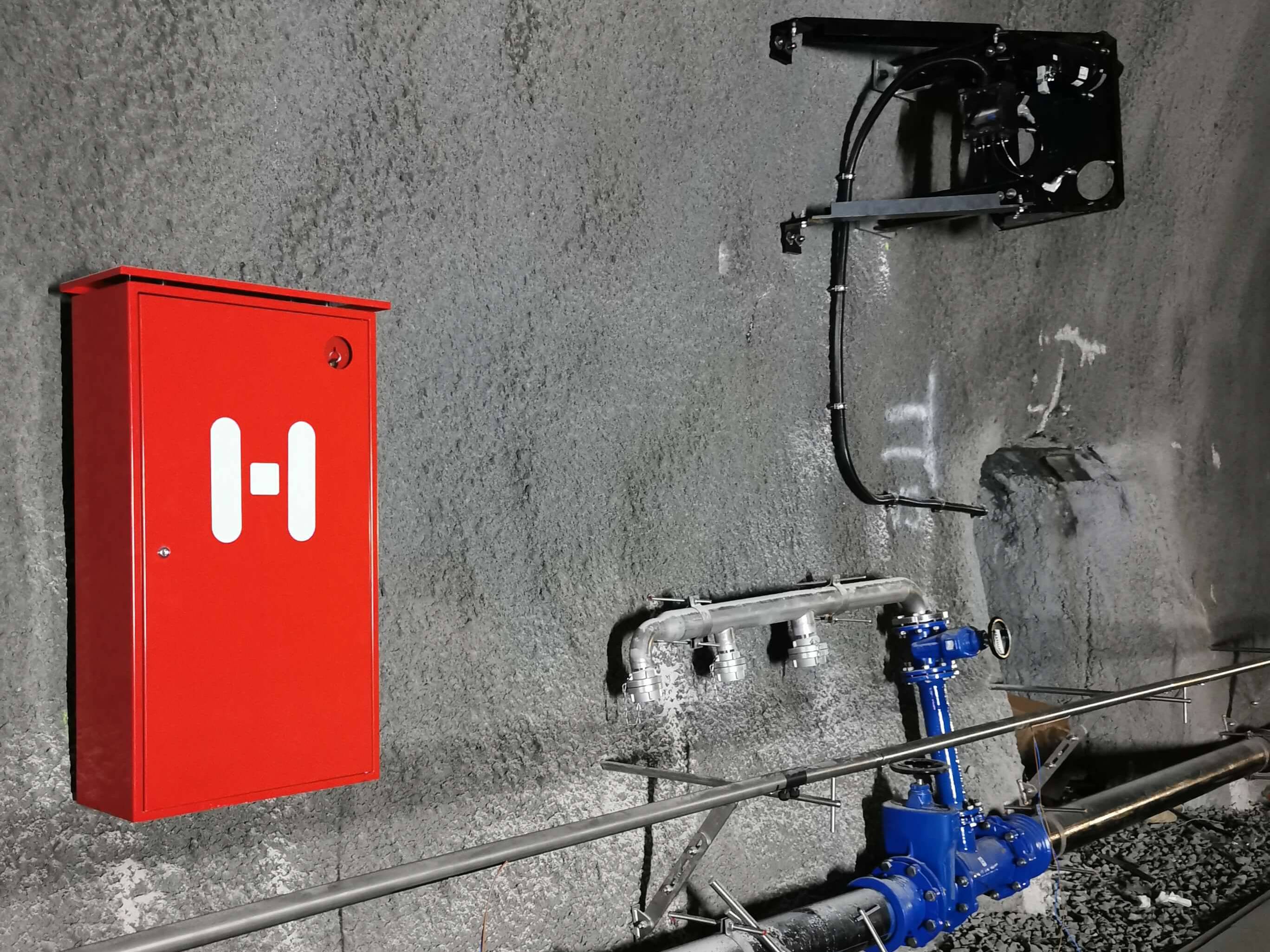
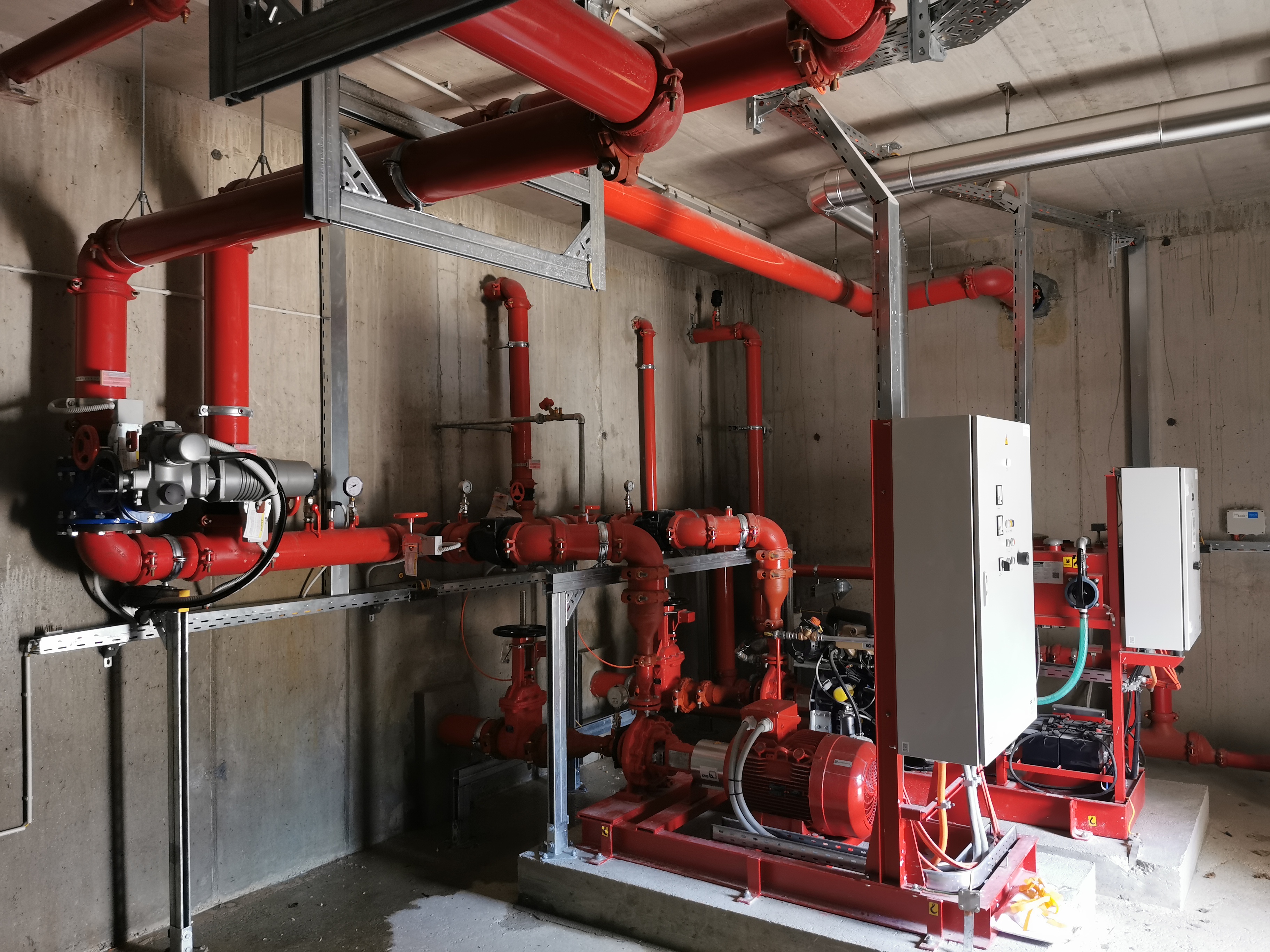
As a subcontractor for the mechanical works, we installed a hydrant network in the tunnel with a total length of 3,600 m and a water tank with a pumping station of 150 m3 located on the south portal. Due to the presence of high-voltage cables in the tunnel, pipes with TT protection DN 150 were installed. A total of 35 hydrants were installed in the tunnel, which are fed by a 30 kW electric pump in the pumping station in case of fire and by an auxiliary diesel pump in case of power failure.
The renovation project was financed by Austria and Slovenia and is estimated to cost around EUR 79 million, with the European Cohesion Fund contributing just over EUR 49 million.